
How to Build a Weekly Outfit System That Actually Works With Your Schedule
For a long time I thought outfit planning was something only extremely organized people did, the kind with color-coded closets and Pinterest boards for every week. It turns out the actual system I eventually landed on is a lot simpler than that, and it’s made a genuinely bigger difference in my mornings than almost any other change I’ve made to my routine.
This guide walks through how I actually built and maintain a weekly outfit system, one that flexes with a busy, unpredictable schedule rather than requiring everything to go exactly according to plan, built on top of the same capsule wardrobe I’ve written about separately.

Why Planning Ahead Matters More Than People Think
Decision fatigue is a real thing, and getting dressed is one more decision added to a morning that’s already full of them, breakfast, backpacks, whoever’s crying about socks that day. Removing even one decision by having outfits roughly pre-planned frees up mental energy for everything else that actually needs your attention in those first chaotic hours.
I didn’t fully appreciate how much this mattered until I actually tried it for a few weeks and noticed how much calmer my mornings felt without one more decision to make before coffee had even kicked in.
Start With Your Actual Weekly Schedule, Not a Generic Template
The first step isn’t picking outfits, it’s mapping out what each day of the week actually looks like. A day with a work meeting looks different from a day that’s just errands and school pickup, and planning outfits without accounting for this mismatch means constantly deviating from the plan anyway.
I keep a simple running note of what each day typically involves, work calls on certain days, a workout class on others, and build outfit planning around that actual rhythm rather than an idealized, identical version of every day.
Batch Planning on a Low-Stress Day
Rather than planning each day’s outfit the morning of, I set aside ten or fifteen minutes on a Sunday to think through the coming week as a whole. This single habit change has done more for my actual morning stress levels than any other part of this system.
I do this while doing something else, folding laundry, having coffee, so it doesn’t feel like an extra task, just a few minutes of intentional thought layered onto something I’m already doing anyway.
Physically Setting Aside Outfits, or Just Making a List
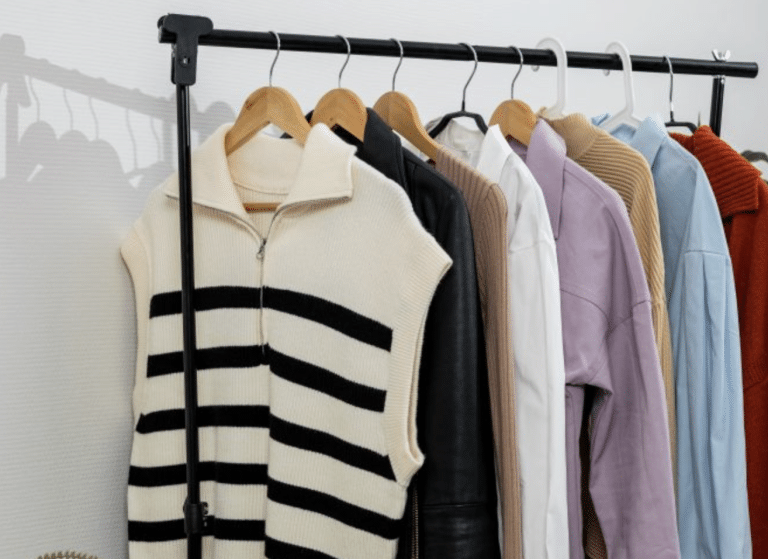
There are two approaches that both work, depending on your closet space and personal preference. Physically pulling and hanging the week’s outfits together removes any morning guesswork entirely, while a simple written or phone-note list works nearly as well if closet space or time doesn’t allow for physical staging.
I’ve done both at different points, and I’ve landed on a hybrid, a quick written list for most days, with physical staging reserved for any day I know will be particularly rushed or high-stakes, like an event or an important meeting.
Building Flexibility Into the Plan From the Start
A rigid plan that assumes perfect weather, mood, and laundry timing will inevitably fall apart, and when it does, it can feel like the whole system failed rather than just needing a small adjustment. I’ve learned to build in a bit of slack, a backup outfit option noted for at least one or two days, so an unexpected wrinkle doesn’t derail the whole week’s plan.
This flexibility is really what’s made the system sustainable long-term, rather than something I abandon after a couple of weeks the first time real life doesn’t cooperate with the plan.
Using Repeatable Formulas Instead of Fully Unique Outfits Every Day
I don’t plan seven completely unique outfits each week, that felt like more effort than it was worth and honestly more decision-making than the system was supposed to eliminate in the first place. Instead, I lean on a rotating set of go-to formulas, jeans and a button-down, leggings and a sweater, a slip dress layered for cooler weather, and just assign them across the week based on that day’s actual demands.
This approach means less actual planning time while still avoiding the “I have nothing to wear” feeling, since the formulas themselves have already proven to work well together.
Accounting for Laundry Realities
A weekly outfit plan built without checking actual laundry status is a plan that falls apart by Wednesday when a key piece turns out to be dirty. I do a quick laundry check as part of my Sunday planning session, making sure the pieces I’m planning to rely on for the week are actually clean and ready.
This sounds obvious written out, but it’s a step I skipped for a long time, and it was the single most common reason my early attempts at outfit planning kept failing partway through the week.
Involving Kids in a Simplified Version
Once this system started working well for me, I adapted a much simpler version for my kids, a small set of pre-approved outfit pairings they can choose between each morning rather than a full free-for-all that always seems to end in a meltdown over mismatched patterns. It’s cut down morning arguments considerably and given them some real sense of choice within a manageable set of options.
This doesn’t need to be elaborate, even just pairing a couple of specific outfits together and letting them pick between two choices removes a lot of the back and forth that used to eat up morning time.
Reviewing and Adjusting the System Periodically
Every few months, I take a look at how the system’s actually working, which formulas I’m relying on most, which planned outfits keep getting skipped in favor of something else, and adjust accordingly. A system that isn’t reviewed occasionally tends to drift out of sync with your actual current life and preferences.
This doesn’t need to be a big process, just a few minutes of honest reflection on what’s actually working versus what looked good in theory but isn’t holding up in practice.
Final Thoughts
A weekly outfit system doesn’t need to be elaborate or rigid to genuinely change your mornings for the better. Mapping out your actual weekly schedule, batch planning during a low-stress moment, leaning on repeatable formulas rather than unique daily outfits, and building in real flexibility together create a system that actually survives contact with a busy, unpredictable life.
If you’re skeptical this kind of planning is worth the effort, I’d suggest trying it for just one week before deciding. The difference in how much calmer your actual mornings feel tends to be noticeable almost immediately, and that alone made it worth the small amount of upfront planning time for me. Start with my outfit formulas post if you need a few combinations to plug into the plan right away, and a properly organized closet makes the whole system even faster to actually execute each morning.