17 Toy Organization Ideas That Actually Keep Kids Playing With What They Have
I used to think we simply had too many toys, until I actually organized them properly and realized the real problem was that most of them were buried somewhere nobody could find or actually use. Once toys had a real, visible system, my kids started playing with things I’d honestly forgotten we owned.
These are the 17 ideas that have actually held up in my house with three kids, counted down to the one that made the biggest overall difference. None of these require an expensive playroom overhaul, just some intentional systems that fit our real, chaotic daily life, the same practical approach behind the chore system that keeps the rest of the house running too.
17. Sort by Category, Not by Kid
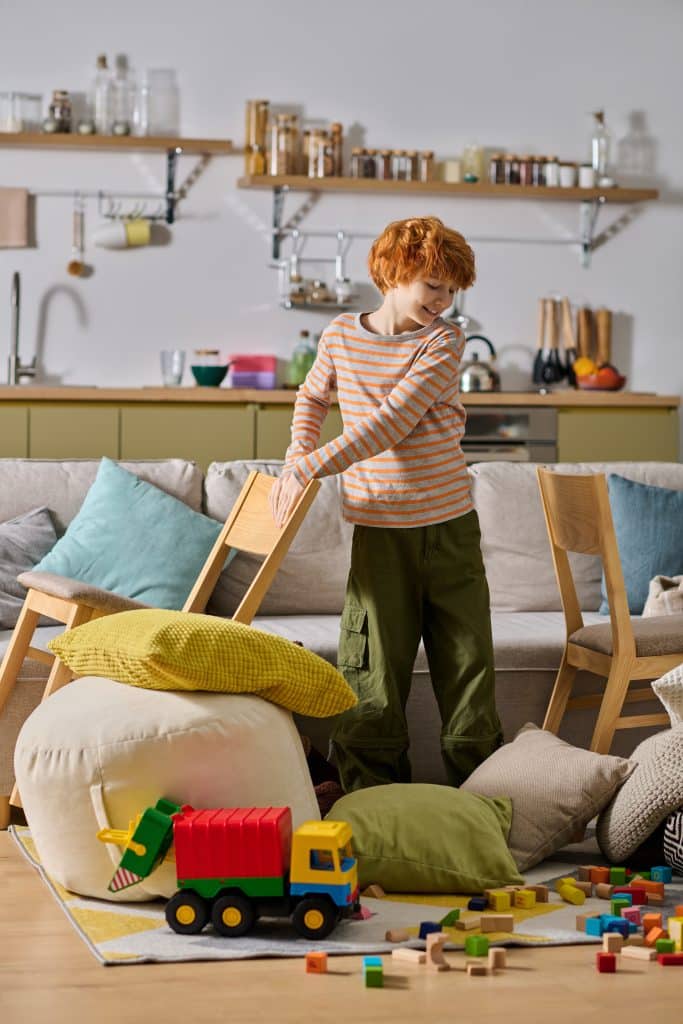
Organizing toys by type, blocks together, art supplies together, rather than by which kid technically owns them, has made cleanup far more intuitive for everyone. Kids can find what they’re looking for based on what they want to play with, not which bin happens to have their name on it.
This has also cut down on sibling squabbles over ownership, since shared categories naturally encourage more shared, cooperative play.
16. Use Clear Bins Whenever Possible
Opaque bins hide contents, which means kids either dump everything out looking for one specific item or simply forget what’s inside and never reach for it at all. Clear bins solve both problems, letting kids see options at a glance without a full excavation.
This small switch alone has meaningfully increased how often certain toys actually get played with, since they’re not sitting invisible in an unmarked box.
15. Rotate Toys Instead of Keeping Everything Out at Once
Keeping every single toy accessible at all times tends to overwhelm rather than inspire actual play, kids often default to the same few familiar favorites when faced with too many options at once. Rotating a portion of toys into storage and swapping them back in every few weeks has made previously ignored toys feel new and interesting again.
This system has also made cleanup considerably faster, since there’s simply less out at any given time to actually pick up.
14. Label Bins With Both Words and Pictures
For younger kids who can’t read yet, picture labels alongside words give an independent way to know where things belong without needing to ask a parent every time. This has made a real difference in how much cleanup my younger two can actually handle on their own.
Simple printed pictures taped to each bin have worked just as well as anything more elaborate or expensive, this doesn’t need to be a fancy labeling project.
13. Create a Designated Spot for Each Toy Category
Rather than a single toy zone that becomes an undifferentiated pile, giving each category its own specific spot, even just a labeled shelf or corner, gives kids a clear mental map of where things belong. This has cut down considerably on the “I don’t know where this goes” excuse during cleanup.
This structure also makes it much easier to notice at a glance when something’s out of place, which has made maintaining the system far less effort over time.
12. Use Vertical Storage for Small Spaces
If floor space is limited, wall-mounted shelves or hanging organizers make use of vertical space that would otherwise go completely unused. This has been especially useful for smaller items, art supplies, small figures, that tend to get lost in a bigger bin otherwise.
This approach has also made toys feel more like a display than clutter, which has genuinely made our smaller playroom feel less chaotic overall.
11. Keep a Donation Bin Running Year-Round
Rather than one big overwhelming purge once a year, keeping a donation bin accessible year-round means outgrown or unused toys leave the house steadily rather than piling up until a single stressful cleanup day. This has kept the overall toy volume far more manageable without ever feeling like a major project.
I empty this bin to an actual donation center every month or two, which keeps the whole system moving rather than becoming its own clutter pile in the meantime.
10. Store Toy Sets Together, Not Scattered by Piece Type
Puzzle pieces mixed in with building blocks, game pieces scattered across multiple bins, this kind of cross-contamination makes complete sets frustrating to actually use. Keeping each set or game together, in its own labeled bag or box, has made a real difference in how often those sets actually get played with start to finish.
Small mesh bags work well for sets with a lot of small pieces, keeping everything contained within the larger designated bin.
9. Create an Easy-Access Zone for Daily Favorites
Not every toy needs equal accessibility, and keeping the current favorites in an easy-to-reach, low spot while less-played-with items live higher up or further back has made daily play more independent for my kids. This naturally rotates as interests shift, without requiring a formal system to manage it.
This small hierarchy has cut down on requests for help reaching things, giving my kids more genuine independence in choosing their own play.
8. Use a Toy Rotation Schedule Tied to Seasons
Beyond general rotation, tying certain toys to specific seasons, outdoor toys more accessible in warmer months, certain games more prominent during colder ones, keeps the overall system feeling fresh and relevant throughout the year. This has made seasonal transitions feel like a natural part of our routine rather than a separate task.
This approach has also helped with storage, since off-season items can move to less accessible storage without anyone missing them in the meantime.
7. Assign Cleanup Responsibility by Zone, Not by Toy
Rather than a vague expectation to “clean up the toys,” assigning each kid a specific zone or category to be responsible for has made cleanup quite a bit more manageable and less overwhelming for everyone involved. This has cut down on the standing-around confusion that used to happen when cleanup felt like one giant, undefined task.
This structure has worked especially well during our nightly tidy-up, where each kid knows exactly which section is theirs to handle.
6. Use a Timer to Make Cleanup Feel Like a Game
Setting a simple timer and turning cleanup into a race against the clock has made an otherwise tedious task feel more like a game, especially for my younger kids. This small shift in framing has genuinely improved cooperation during what used to be one of our more resisted daily routines.
This works best paired with the zone system above, giving each kid a clear, specific task to race against the timer to complete.
5. Keep Art Supplies in a Separate, Contained System
Art supplies tend to scatter and mix with other toys in a way that makes both categories harder to actually use. A dedicated, contained system, a rolling cart or a specific drawer, keeps markers with markers and paper with paper, which has made both cleanup and actual creative play noticeably smoother.
This separation has also protected our other toys from stray marker marks, which was a genuine, ongoing problem before we made this specific change.
4. Store Stuffed Animals in a Net Hammock or Large Bin
Stuffed animals tend to multiply and take up disproportionate space relative to how much they’re actually played with. A net hammock in a corner, or one large designated bin, contains the collection without letting it spread across an entire room.
This has been one of the more visually satisfying changes in our whole system, instantly making a room look less cluttered even before touching anything else.
3. Build a Simple System Kids Can Actually Maintain Themselves
A system that only a parent can understand and maintain isn’t really sustainable long-term, and I’ve found the systems that actually last are the ones simple and clear enough for my kids to maintain mostly on their own. This has meant prioritizing clarity and simplicity over an elaborate, adult-designed organizational system that looks impressive but isn’t realistic for a kid to actually follow independently.
This shift in priority, kid-usable over parent-impressive, has made the single biggest difference in how consistently our system actually stays maintained day to day.
2. Regularly Reassess What’s Actually Being Played With
Toys that seemed exciting at purchase sometimes end up genuinely unused within weeks, and periodically reassessing what’s actually getting played with, rather than assuming everything still holds the same appeal it once did, has kept our overall collection more relevant and manageable. I do this roughly every few months, using it as a natural moment to also identify donation candidates.
This ongoing reassessment has prevented our toy collection from just steadily accumulating without ever actually shrinking back down.
1. Involve Kids in Designing Their Own System
The single biggest shift for us was involving my kids directly in deciding how their own toys should be organized, rather than imposing an adult-designed system from above. Kids who have genuine input into where things belong show far more consistent follow-through in actually maintaining that system day to day than kids handed a system they had no say in creating.
This doesn’t need to be a complicated process, even just asking where they think a certain toy category should live has built real ownership over the whole system. If I could go back and change just one thing about our earlier, less successful attempts at toy organization, it would be starting with this step from the very beginning. The same visible, kid-friendly approach shows up in our family command center, which has made the whole house easier for everyone to actually navigate.